Find wooden card holder for business, gifts, and daily use
Source 30 wooden card holder options from suppliers in China. Buyers can compare materials like solid wood and brass, finishes such as matte lacquer, and customization features for business, gifts, and daily use.
Key considerations
Products List










Comprehensive Sourcing Guide
Strategic Sourcing Guide for Wooden Card Holders
The global market for wooden card holders has evolved from a niche artisanal product into a versatile B2B procurement category serving diverse sectors including corporate gifting, retail branding, and personal accessories. For procurement professionals, sourcing these items requires a nuanced understanding of material composition, finishing techniques, and the specific customization capabilities available in the supply chain. This guide synthesizes observed market data and technical attributes to provide a disciplined framework for evaluating suppliers and defining product specifications without relying on unverified claims or speculative market figures.
Material Composition and Structural Integrity
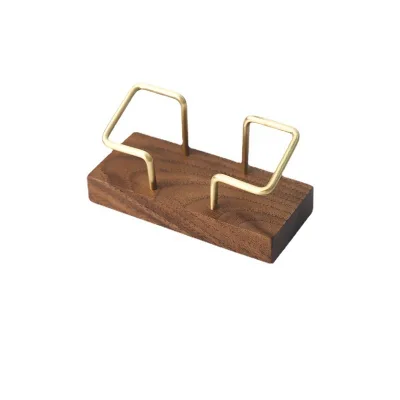
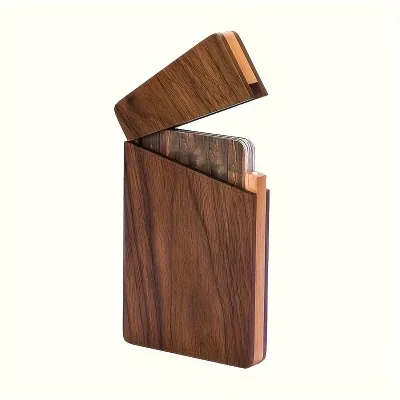
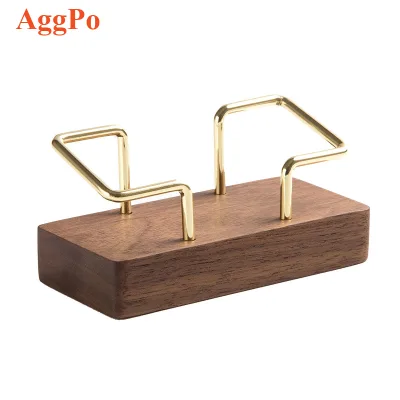
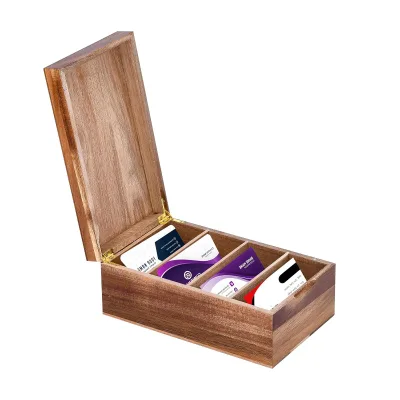
The foundation of any wooden card holder lies in its material selection, which directly influences durability, aesthetic appeal, and cost. Current market observations indicate a strong preference for solid wood, particularly walnut, which offers a rich grain and premium feel suitable for high-end branding. However, the supply chain also supports hybrid constructions where brass is combined with walnut wood to enhance structural rigidity and add a metallic accent. Buyers must verify the specific material composition for each order, as "wooden" is a broad descriptor that can range from solid hardwoods to engineered wood composites.
When evaluating structural integrity, dimensional tolerances are a critical technical specification. Observed data suggests that manufacturers often adhere to a dimensional tolerance of less than ±1cm for overall size, though precision requirements may vary based on the specific model. For instance, a standard business card holder might have an outer size of 11x5cm with an inner dimension of 9x3cm. Procurement teams should explicitly request tolerance data in the product specification sheet, as deviations beyond acceptable limits can lead to fitting issues with standard credit cards or business cards. Furthermore, the presence of a straight groove with a specific width, such as 2mm, indicates a design feature intended for card retention or aesthetic detailing, which must be confirmed during the sampling phase.
Finishing Processes and Surface Treatments
The visual and tactile quality of a wooden card holder is largely determined by the finishing processes applied. The supply chain demonstrates a capability for complex surface effects, including various plating options such as nickel, tin, copper, gold, and bronze. These metal finishes are often applied to brass components or as accents on the wood to create a "luxury" or "antique" aesthetic. In addition to plating, surface treatments like matt lacquer are utilized to provide a non-reflective, smooth finish that protects the wood grain while offering a modern look.
The customization of the surface is a significant value driver in this category. Suppliers frequently offer "printed" techniques alongside the natural color of the wood, allowing for the integration of logos or intricate patterns. The "antique" plating style, combined with "matt lacquer," creates a specific vintage profile that appeals to collectors and high-end gift markets. Buyers should note that the "flashing" and "3D" features observed in related product lines suggest that some manufacturers can produce dynamic visual effects, though these may require specific tooling or additional processing steps. When requesting samples, it is essential to verify the adhesion of the lacquer and the uniformity of the plating, as these are common points of failure in mass production.
Customization Capabilities and Production Flexibility
One of the most compelling aspects of sourcing wooden card holders is the high degree of customization available. The market data confirms that customization is a standard offering, with options for custom logos, specific dimensions, and unique packaging configurations. The "Customized Option" is listed as "Yes" across various product models, indicating that suppliers are prepared to tailor products to specific brand requirements. This flexibility extends to the "Wearing Way" and "Attachment" mechanisms, where options like butterfly clutches or shoulder attachments suggest a broader range of product forms, including wearable accessories or multi-functional holders.
The production process for customized items often involves "polishing" to refine the edges and surfaces before final assembly. This step is crucial for ensuring a premium feel, especially for items intended as "Commerce Gifts & Decoration" or "Religion Gifts." The ability to customize the "Storage" function, such as integrating a specific "Business Card Holder" capacity, allows buyers to create products that serve dual purposes. Additionally, the "Style" attribute ranges from "Fashion" and "Creative" to "Simple" and "Ancient," providing a wide spectrum of design languages to match different target demographics. Buyers should leverage this flexibility to align the product design with their specific brand identity, whether that involves a "luxury" aesthetic or a "daily use" practicality.
Compliance, Certification, and Quality Assurance
In the B2B sector, compliance and certification are non-negotiable prerequisites for sourcing, particularly for products intended for international markets. The supply chain data indicates that reputable manufacturers often hold certifications such as CE, RoHS, and SGS. These certifications are critical for verifying that the materials used, including any metal platings or chemical finishes, meet safety and environmental standards. The "Eco-Friendly" feature observed in some listings suggests a growing market demand for sustainable sourcing, which aligns with the use of solid wood and brass.
Quality assurance protocols must be rigorous, especially given the variability in natural materials like wood. Buyers should verify that the "Feature" list includes "With Logo" and "Eco-Friendly" claims through independent testing or supplier documentation. The "Certifications" listed, such as CE/RoHS/SGS, should be validated against the specific batch of goods being ordered. Furthermore, the "Standard" for the product may vary, with some models adhering to specific size standards (e.g., S, M, L) while others offer fully customizable dimensions. Procurement teams must ensure that the supplier's quality control processes cover the entire production run, from raw material inspection to final packaging, to prevent defects such as warping, loose fittings, or inconsistent plating.
Cost Drivers and Minimum Order Quantities
Understanding the cost structure of wooden card holders is essential for budgeting and negotiation. The observed price range in the market spans from $0.09 to $25, a wide variance that reflects differences in material quality, complexity of finishing, and order volume. The "MOQ" (Minimum Order Quantity) also varies significantly, with some suppliers offering low entry points of 5 pieces for stock items, while others require orders of 300 pieces or more for customized runs. This disparity highlights the importance of aligning order volume with the supplier's production capabilities.
Several factors drive the cost of these products. The use of "solid wood" and "brass" materials inherently increases the base cost compared to synthetic alternatives. The complexity of the "Surface Effect," such as multi-layer plating or intricate printing, adds to the processing time and cost. Additionally, the "Packing Way" can influence the final price; options like "Individual Bubble Bag," "Tin Box," or "Watch Box" are more expensive than bulk cartons. Buyers should carefully evaluate the trade-off between packaging aesthetics and cost, especially for products intended as "Gifts" or "Home Decoration." The "Location" of the supplier, often cited as Fujian, China, can also impact logistics costs and lead times, which must be factored into the total landed cost.
Supplier Evaluation and Long-Term Procurement Strategy
Selecting the right supplier for wooden card holders requires a holistic evaluation of their capabilities, reliability, and alignment with the buyer's long-term goals. The "Brand Name" and "Product Name" provided in the market data, such as "Creative Hi" or "Walnut Wood Business Card Holder," serve as identifiers but should not be the sole basis for selection. Instead, buyers should focus on the supplier's ability to meet technical specifications, such as the "Single package size" of 12x6x6 cm, and their adherence to the "prod_standard" requirements.
Long-term procurement strategies should prioritize suppliers who demonstrate consistency in "Processing" and "Finishing" techniques. The ability to maintain quality across large batches, especially for items with "Customized" features, is a key indicator of a reliable partner. Buyers should also consider the "Storage" and "Packing" capabilities of the supplier, ensuring they can handle the specific requirements of the product, such as "Individual Bubble Bag" or "Bulk Pack Into Carton." Finally, the "Occasion" for which the product is intended, such as "Festival" or "Daily Use," should guide the selection of a supplier who understands the specific market demands and can deliver products that resonate with the end-user. By focusing on these technical and operational criteria, buyers can build a robust supply chain that delivers high-quality wooden card holders consistently.
FAQs
What materials are used for wooden card holders?
The primary materials include solid wood and combinations of brass with walnut wood. Some products feature a straight groove of 2mm width and adhere to dimensional tolerances of less than ±1cm for precise fitting.
Can I customize the logo and finish on these holders?
Yes, customization options are available including printed logos and various surface effects like nickel, tin, copper, gold, or bronze plating. Matt lacquer finishing is also offered to create a non-reflective, smooth texture on the wood.
What are the minimum order quantities for custom orders?
Minimum order quantities vary significantly depending on the product model and customization level. Some stock items require as few as 5 pieces, while custom runs typically start at 300 pieces or higher based on specific supplier capabilities.
Which certifications do the manufacturers hold for safety?
Reputable suppliers often provide products certified under CE, RoHS, and SGS standards. These certifications verify that materials and plating processes meet international safety and environmental requirements for the global market.
How are the products packed for shipping and storage?
Packaging options range from individual bubble bags and OPP bags to tin boxes and watch boxes. Bulk shipments are typically packed into cartons, with specific dimensions like 12x6x6 cm for single packages.
Where are these wooden card holders manufactured?
The products originate from Fujian, China, which is a known manufacturing hub for this category. Suppliers in this region offer a wide range of styles from fashion to antique designs with various finishing techniques.